
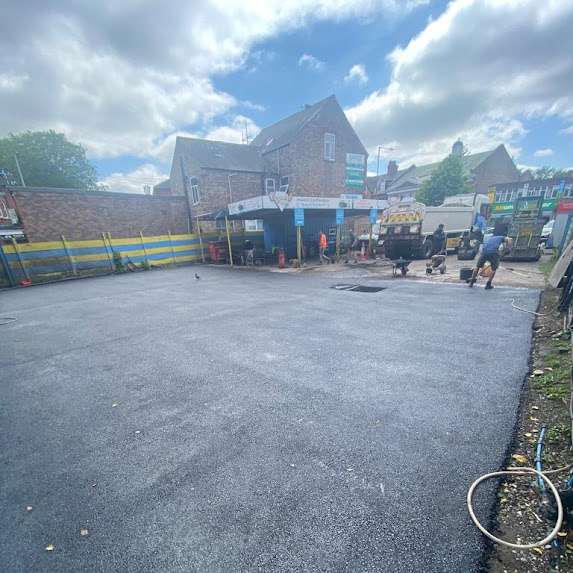
If you’re thinking of installing a tarmac driveway for your property, you may have some queries about its durability and lifespan. After all, a driveway is an investment in your property’s usability and kerb appeal, so you’ll want to get it right first time.
One of the main features that gives tarmac its impressive strength and resistance to wear and tear is its thickness. With this in mind, let’s take a closer look at how thick your tarmac driveway should be so you can make the most out of it.
Layer by layer: Tarmac driveway thicknesses
Many property owners assume that tarmac driveway installation only involves one layer of tarmac, but there are actually multiple involved in the process.
Layer 1: Sub-base
Recommended thickness before compacting: Two 50mm to 75mm layers
An initial layer of sub-base is designed to provide your driveway with ample structural support and weight distribution for heavy vehicles and foot traffic over an extended period.
When maintained and cared for properly, tarmac driveways can last up to 20 years and sometimes more — so this is an incredibly important part of the installation.
What can you use as a tarmac driveway sub-base?
The most popular sub-base for tarmac driveway installations is a Type 1 MOT Hardcore. This mixture of crushed stone and/or concrete compacts well and offers impressive load-bearing characteristics, making it a top choice for driveway installations and road surfacing.
Other popular options include Type 3 open-graded aggregate for efficient drainage, crusher run as a budget-friendly option, and recycled crushed concrete as an eco-friendly alternative.
Layer 2: Binder course
Recommended thickness before compacting: One 50mm to 60mm layer
The binder course is a base layer of tarmac used to bind the following surface layer to the sub-base.
Made from coarse aggregates and bitumen, this tarmac layer acts as an adhesive while also distributing weight from the surface layer down to the sub-base. It can also improve the durability of your tarmac driveway, preventing cracking and dipping under heavy loads.
Installing a 50mm to 60mm layer of binder course will be thick enough to prevent the layers from separating and also minimise the risk of cracking under pressure. We recommend a 50mm thickness for residential tarmac driveways and a 60mm thickness for commercial tarmac driveways to account for more traffic.
Layer 3: Wearing course
Recommended thickness before compacting: One 25mm to 30mm layer
The wearing course, also known as the surface layer, is the topmost layer used in a tarmac driveway installation. The goal of the wearing course is to create a smooth surface designed for direct contact with vehicles and footfall.
This layer consists of the same bitumen and aggregate mixture as the binder course, but the aggregates for a wearing course are much finer for a neat and even surface finish.
A 25mm layer is ideal for residential tarmac driveways housing family cars and smaller vehicles, and a 30mm layer should be sufficient for commercial tarmac driveways used by vans, trucks, and heavy-load vehicles.
Once these three layers have been compacted, you can expect a 10 to 25% reduction in thickness, resulting in a tarmac driveway that is approximately 131mm to 216mm (5.2 to 8.5 inches) thick.
Why is it important to get tarmac thickness right?
The thickness of your tarmac driveway directly correlates to its strength and lifespan. If you install your driveway and the layers are too thick or thin, you could compromise your driveway’s performance and usability.
- For weight bearing: Your tarmac driveway will need to securely hold the weight of vehicles for an extended period of time. If the layer is too thin, it is more likely to crack under pressure or create depressions due to weight imbalance.
- For durability: Thin layers are more susceptible to wear and tear or weather damage, potentially leading to surface breakage. Thick layers are also difficult to compact during installation, creating weaknesses for water to leak through.
- For stability: Thin layers can cool too quickly, making compaction even more difficult. Similarly, thick layers can trap air if not compacted properly. Both can create unstable surfaces that are more likely to sink or crack.
- For drainage: Thin layers may result in excessive water penetration and potentially even freeze-thaw damage, weakening the sub-base’s structural integrity. With thick layers, you may see water pooling due to the gradient of the tarmac driveway not being followed.
- For appearance: If you have a tarmac driveway that is too thick, it will be raised, creating an unsightly step. Too thin, and you risk the surface developing cracks and potholes.
- For useability: Following on from the above, thick driveways can cause an obstacle for vehicles due to the uneven surface. The surface damage from thin driveway layers can also create difficulties when manoeuvring.
Trust in our driveway surfacing contractors instead
With over 30 years of experience in conducting driveway and surfacing installations across the North West, our contractors know everything about installing a high-quality tarmac driveway.
While it is possible to install a driveway yourself with the right tools and equipment, our team can get the job done for you with 100% satisfaction guaranteed. We’ll come to your residential or commercial property with all the expertise, equipment, and tools needed so you don’t have to stress.
Call us on 07765 098 355or fill in our simple contact form today to discuss your project and receive a free, no-obligation quote estimate.