
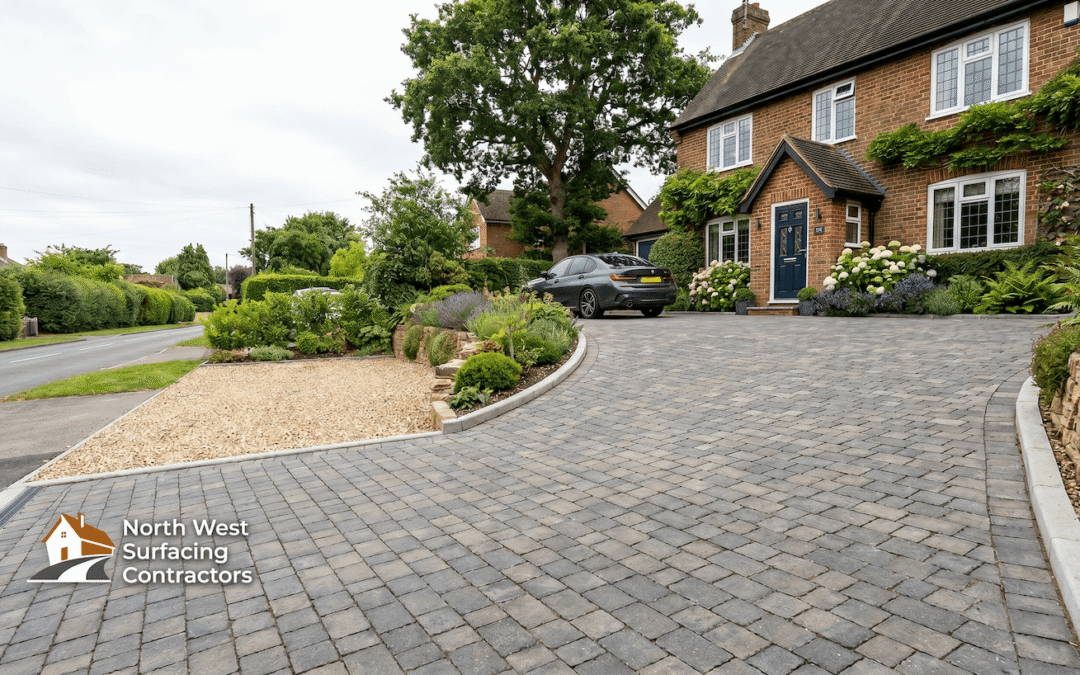
Whether you’re working with a gentle incline or a steep drop, there are plenty of sloped driveway ideas that can transform a tricky plot into a great-looking, fully functional entrance to your home. In this guide, we cover everything you need to know: style options, drainage solutions, safety considerations, and even what to do if you share your driveway with a neighbour.
Why a Sloped Driveway Needs Careful Planning
A flat driveway is relatively straightforward to design and install. A sloped driveway, however, requires more thought upfront, and getting it right from the start will save you a lot of headaches further down the line.
The key concerns with a sloped driveway are:
Drainage – Water naturally flows downhill. Without proper drainage, this can lead to flooding, surface erosion, or water pooling against your house foundations.
Safety – Steep gradients can become slippery, especially in wet or icy conditions. The surface material you choose makes a significant difference here.
Aesthetics – Slopes can look awkward if the driveway isn’t designed sympathetically with the surrounding landscape and property.
The good news is that a well-planned sloped driveway can look just as impressive and work just as well as a flat one. Take a look at our driveway gallery to see examples of the work we’ve completed across the North West.
Sloped Driveway Ideas: Styles That Work With the Gradient
The best sloped driveway ideas work with the slope rather than against it. Here are some of the most popular approaches.
- Block Paving on a Slope
Block paving is one of the most versatile surfaces for a sloped driveway. Individual blocks can be laid in a herringbone or stretcher bond pattern to create a surface that’s both grippy and visually attractive. The texture between the blocks provides natural traction, which is a real advantage on steeper gradients.
For a sloping driveway towards the house, block paving can also be laid with subtle channels built in to direct water away from the property; more on that below.
- Tarmac (Asphalt) Driveways
Tarmac is one of the most practical surfaces for sloped driveways. It can be laid smoothly across a gradient and provides a consistent, non-slip surface when properly finished. It’s also cost-effective and durable, making it a popular choice for homeowners with steep or awkward plots.
A skilled installer can profile the tarmac surface to naturally direct water flow away from the house, reducing the risk of flooding without needing elaborate drainage systems. Our guide on how much a tarmac driveway costs breaks down everything you need to budget for.
- Resin-Bound Gravel
Resin-bound surfaces are becoming increasingly popular for sloped driveways because they’re both SuDS-compliant (meaning water drains through the surface naturally) and highly attractive. The permeable nature of resin-bound gravel means water soaks through rather than running off, which makes it an excellent drainage-friendly option for sloped plots.
It also comes in a wide range of colours and aggregate sizes, making it easy to complement your home’s exterior.
- Pattern Imprinted Concrete
For homeowners who want a bold, decorative look, pattern imprinted concrete can work well on moderate slopes. It can be finished with anti-slip additives to improve traction, and the sealed surface is easy to maintain. However, it’s worth noting that very steep gradients can make installation more challenging, so always speak to a professional installer before committing.
- Retaining Walls and Tiered Designs
For significant slopes, a tiered driveway with retaining walls can create a striking, architectural look. Rather than fighting the gradient with one continuous surface, a tiered design breaks the slope into sections, often with planting or decorative stonework between levels. This can turn an awkward slope into a genuine feature of your property.
It’s worth checking whether planning permission may be required for significant groundworks. Our guide on planning permission for driveways covers everything you need to know.
Drainage Solutions for Sloped Driveways
Channel Drains (Linear Drainage)
A channel drain installed across the width of the driveway, typically at the base of the slope or just in front of the garage/entrance, intercepts water before it reaches the property. These are discreet, effective, and can be finished with attractive grates to suit the overall aesthetic.
Permeable Surfaces
As mentioned above, permeable surfaces like resin-bound gravel or certain types of block paving allow water to drain through the surface itself, reducing the volume of runoff entirely. This is often the simplest and most sustainable solution for sloped driveways.
French Drains
For more severe drainage issues, a French drain (a gravel-filled trench with a perforated pipe) can be installed alongside the driveway to redirect groundwater away from the property. This is particularly useful where the surrounding soil is slow-draining.
Graded Profiles
An experienced driveway installer will also grade the surface so that water naturally flows towards the sides of the driveway rather than straight down the middle towards your house. This is a fundamental part of good sloped driveway design and shouldn’t be overlooked.
Safety on a Sloped Driveway
A sloped driveway that looks great but is dangerous to use is no use to anyone. Here are the key safety factors to consider.
Surface Texture and Grip
Smooth surfaces, particularly polished concrete or certain types of imprinted concrete, can become dangerously slippery when wet or icy. For steeper gradients, prioritise surfaces with natural texture (block paving or exposed aggregate resin) or ask your installer about anti-slip finishes.
Gradient Limits
As a general rule, a driveway gradient steeper than 1:5 (20%) becomes difficult to use safely, especially for reversing vehicles or elderly/disabled users. If your plot is very steep, consider whether a switchback layout where the driveway curves to reduce the effective gradient might be a better solution.
Handrails and Edging
If pedestrians regularly walk alongside the driveway, a handrail or raised edging can provide additional safety on steep sections. This is especially worth considering for properties where children or elderly residents are present.
Ice and Winter Maintenance
All driveways can become slippery in freezing conditions, but sloped driveways are especially vulnerable. Gritting in icy weather is essential. Our guide on how to maintain your driveway in all seasons has useful tips that apply to any surface type.
Sloping Driveway Towards the House: What You Need to Know
A driveway that slopes towards the house rather than away from it is one of the most common concerns we hear from homeowners. The worry is understandable; if water follows the gradient into your property, the consequences can be serious.
The key is to intercept the water before it reaches the building. A channel drain positioned just in front of the garage door or entrance is one of the most effective solutions. Pair this with a permeable or properly graded surface, and you’ll significantly reduce the risk of water ingress.
It’s also worth checking whether your garage door threshold has adequate weatherproofing and ensuring that any existing drainage around the property is functioning correctly. If you’re in any doubt, a professional drainage survey can identify problem areas before they become expensive repairs.
How to Separate a Shared Driveway
If you share a driveway with a neighbour and want to create a clearer boundary or separate the two properties entirely, there are several practical options depending on your situation.
Physical Boundary Markers
The simplest approach is to install a low kerb, edging stones, or a dividing strip along the boundary line. This doesn’t prevent access but makes the separation visually clear and can help define each owner’s responsibility for maintenance.
Different Surface Materials
Using contrasting surface materials on each side of the boundary is a popular way to visually separate a shared driveway. For example, one property might have block paving while the other has tarmac. The change in material makes the division obvious without needing a physical barrier.
Fencing, Walls, or Hedging
If you need a more definitive separation for privacy or security, a low wall, fence, or hedge along the boundary can provide a clear divide. This does require careful consideration of access requirements and may need discussion with your neighbour (and potentially your local planning authority if structures exceed certain heights).
Legal Considerations
Before making any changes to a shared driveway, it’s important to check your deeds and any existing easements or rights of way. Shared driveways often come with legal agreements about who can use them and how they’re maintained. Seeking legal advice before carrying out significant alterations is always sensible.
Will a New Driveway Add Value to Your Home?
One question we’re often asked is whether investing in a new driveway is worth it financially. The short answer is yes. A well-installed driveway, even on a challenging sloped plot, can significantly boost kerb appeal and property value. We’ve written in depth about how much value a driveway adds to your home if you’d like to explore the numbers.
Choosing the Right Installer for Your Sloped Driveway
Whatever surface you choose, the quality of the installation matters enormously, especially on a slope. Poor groundwork, incorrect grading, or inadequate drainage can turn a beautiful driveway into an expensive problem within just a few years.
At North West Surfacing, we’ve installed countless driveways across a range of gradients and ground conditions. We understand the specific challenges that sloped plots present, and we design every driveway with drainage and long-term performance in mind, not just how it looks on day one.
If you’re planning a new driveway or looking to replace an existing one on a sloped plot, we’d love to help. Get in touch with our team for a free, no-obligation quote and advice tailored to your specific site.