
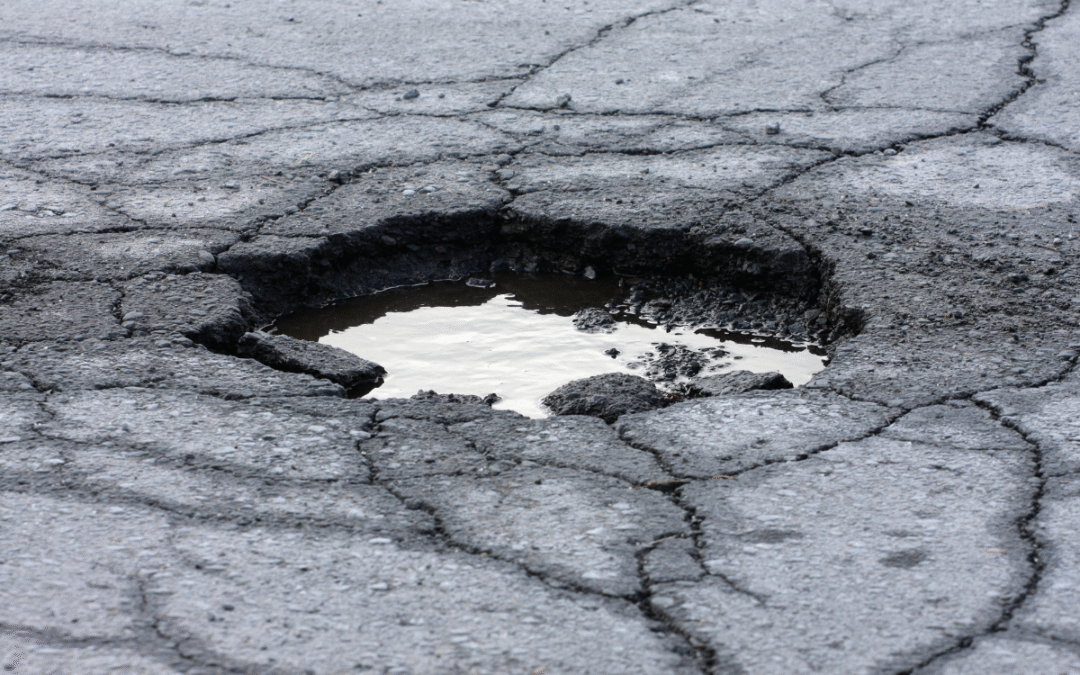
Nothing is more frustrating than reversing up your driveway to suddenly feel a bump and a crack. This is when you know you’ve hit a pot hole. But what actually causes potholes? Despite being one of the most common surface issues in the UK, few people realise how potholes form or how easily they can be prevented with regular maintenance.
At North West Surfacing, we’ve spent over 30 years repairing and resurfacing tarmac surfaces across Wigan, Manchester, Liverpool and the wider North West. We’ve seen how small cracks can quickly turn into big potholes if left untreated – damaging vehicles, creating safety hazards, and leaving a poor impression on visitors and customers. So, let’s take a closer look at what causes potholes and how to stop them from forming in the first place.
How Do Pot Holes Form?
Potholes are the result of a natural but damaging cycle involving water, temperature, and time. When rainwater seeps into tiny cracks in tarmac or asphalt, it begins to weaken the surface from below. As temperatures drop, that water freezes and expands, pushing apart the surface layers. When it thaws, it leaves behind small gaps that compromise the material’s structure.
Over time, as vehicles repeatedly pass over those weakened areas, the surface breaks away – leaving a pothole. This process happens faster in the UK due to our wet and ever changing climate. Even the most durable surfaces can eventually suffer damage if they’re not maintained properly.
Weather and Water Combined
The biggest threat of any tarmac surface is water. Once it penetrates below the surface, it undermines the strength of the underlying layers, leading to instability and cracks. During the winter, when freezing temperatures cause expansion, these cracks widen even further. Repeated cycles of freezing and thawing accelerate the breakdown of the surface.
UV rays and heat can also speed up the process during the summer. Prolonged exposure to sunlight can cause asphalt to oxidise and become brittle, increasing the likelihood of cracks forming. Combine that with heavy rain and fluctuating temperatures, and it’s the perfect recipe for potholes to appear.
That’s why regular maintenance and surface sealing are essential to prevent water from penetrating and stop small cracks from developing into costly repairs.
Heavy Traffic and Poor Drainage
Not all potholes can be caused by weather alone. The type and volume of traffic can play an important role too. Car parks that experience frequent use by delivery vans, HGVs, or large volumes of vehicles are at greater risk. The constant pressure and weight cause stress on the surface, particularly if the sub-base of the driveway wasn’t designed for heavy load vehicles.
Poor drainage also contributes significantly. If rainwater isn’t directed away from the surface effectively, it will pool and eventually find its way into small surface defects. Over time, this consistent water exposure leads to cracks, erosion and, inevitably, potholes.
At North West Surfacing, we always ensure proper surface grading and drainage as part of our resurfacing work, helping clients avoid repeat issues down the line.
Common Areas Where Pot Holes Develop
Potholes are common in car parks, industrial yards, delivery bays and access roads. These areas experience a combination of vehicle weight, turning movements, and water exposure.
For commercial properties and local authorities, potholes can create serious risks. Beyond vehicle damage, they pose safety hazards for pedestrians and can affect accessibility for disabled users. Left untreated, the damage spreads quickly – increasing the cost and scale of repair work.
How to Prevent and Repair Pot Holes
Preventing potholes starts with regular inspection and maintenance. Sealing cracks early stops water from getting in, while resurfacing older areas restores strength and appearance. For deeper damage, pothole patching or full resurfacing is the best long term fix to ensure the repaired area bonds securely and remains durable.
At North West Surfacing, we use specialist techniques and materials to repair potholes and restore smooth, durable surfaces. Our team assesses the cause of the damage before carrying out any work, ensuring the issue doesn’t return. Whether for a homeowners driveway or a large commercial site, we provide lasting solutions that look professional and perform reliably.
Contact Northwest Surfacing Today!
So, what causes potholes? In most cases, it’s a mix of water infiltration, weather changes, heavy traffic and poor drainage – all of which weaken the surface over time. But with the right maintenance and prompt repairs, you can prevent small cracks from turning into costly damage in the future.
If your car park, access road or commercial surface is showing signs of wear, contact North West Surfacing today. Our experienced team provides pothole repairs and resurfacing services across the North West, helping you keep your property safe, compliant, and looking its best all year round.